
Even though I am probably beyond my half-life, I am just now really trying to learn how to think. In school we learn how to recite information, perhaps even how to use Bloom’s taxonomy to go beyond facts and learn the concepts and perhaps even how to create something from the basic understanding we might have. But how do you determine if an idea is a valid idea? How do you take an idea and move beyond agreeing or disagreeing? This is a basic template of a series of questions or steps to take on how to think critically about an idea, but not necessarily an exhaustive resource.
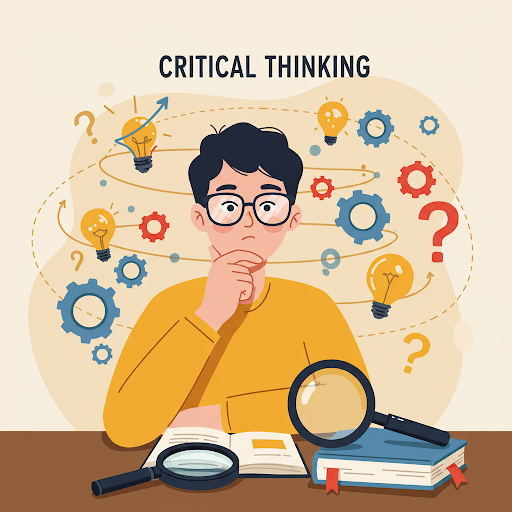
- Simplify the idea. Define key terms. Break it down into parts if necessary due to complexity. You can even go the extra mile and learn the symbols of logic and look at the argument from a purely logical fashion. Ask questions about any unstated arguments or premises (these are called enthymemes).
- Was any proof provided? What kind of evidence is acceptable? How much proof is necessary?
- Does the idea contradict itself (the law of non-contradiction)?
- Can the idea be stated as true or false (law of excluded middle)?
- Does Scripture support or deny this idea?
- Is the idea a fact from facts idea (deductive) or inductive (obtained from generalizations or assumptions based on other known information)?
- Is the idea a mere representation of facts or the facts themselves?
- Does the idea come from premises that make the conclusion likely? Are the premises themselves true? Is it a strong idea? Do the premises require the conclusion provided?
- Where does the idea come from?
- Is this a topic that I can claim some authority over, giving me the ability to assess this idea properly? If not, what resources or people should defer to?
- How will this idea impact things if it is true/false?
- What ideas are similar/different to this one?
- Ask as many of the Who, What, When, Where, Why, and How questions that pertain to this idea (i.e. who benefits from this idea? What is the opposite of this idea? Where would I see this idea in the real world? When is this idea assumed in areas of modern society? Why is this idea important? How can we validate this idea? etc.).
- What logical fallacies may be at play here both in the idea and/or it’s premises, or how I am thinking about it?
- Take the next step: If this idea is true/false, what impact will this have on the people, places, and things around me that I need to compensate or be prepared for?
- How do I apply this idea to my life or the lives of those around me?

 Truth & Tech
Leave a comment